
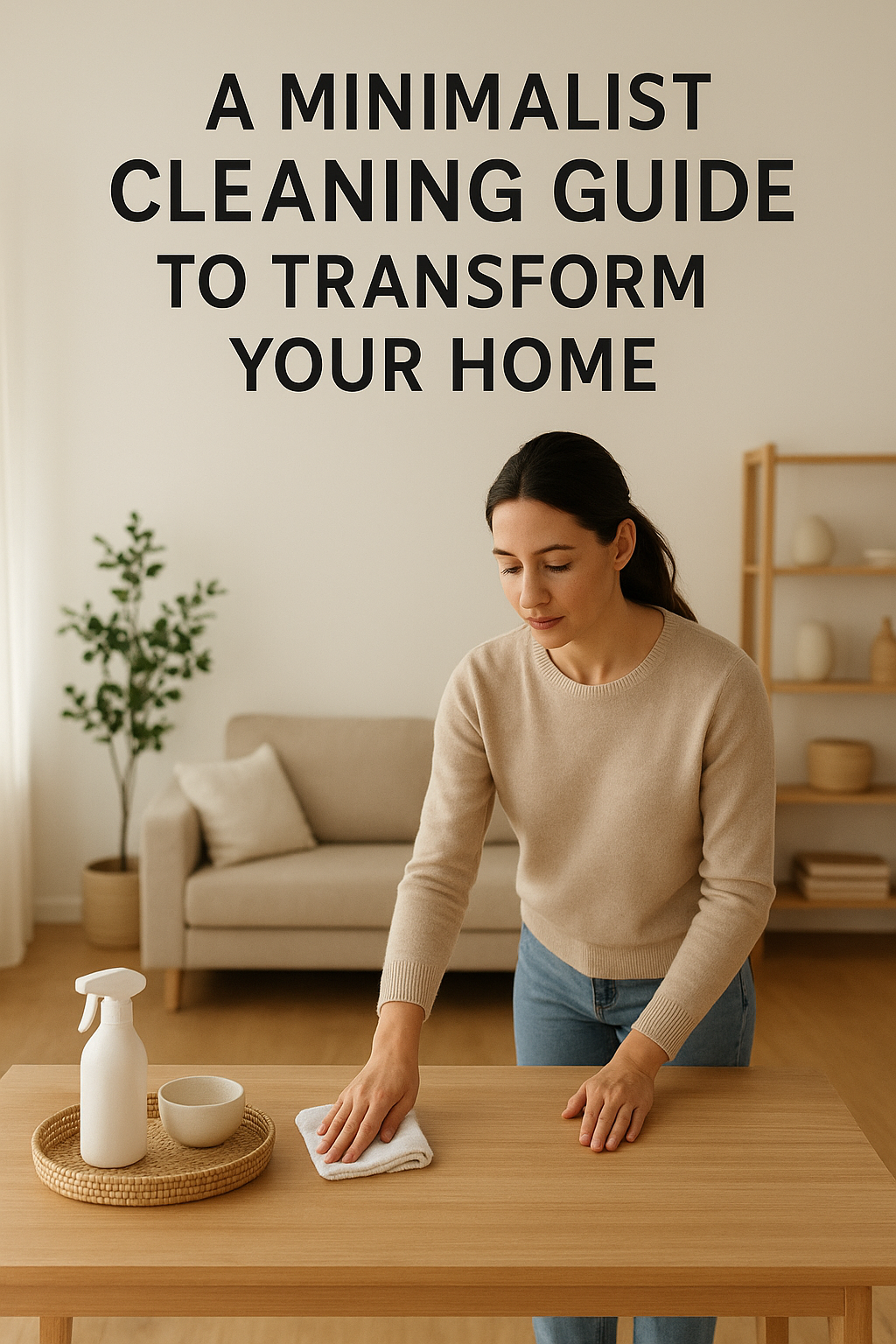
A clean home doesn’t need to be the result of endless hours of scrubbing, reorganizing, and fighting against clutter. In fact, the minimalist approach shows that cleaning becomes dramatically easier when your environment contains only what you truly need and use. Instead of constantly managing excess, you begin to experience a lighter, simpler version of home care.
This guide will show you how to transform your home through minimalist cleaning—focusing on practicality, simplicity, and efficiency. You don’t need expensive tools or complicated systems. You only need intention and consistency.
Why Minimalist Cleaning Feels Different
Traditional cleaning often feels overwhelming because you are cleaning around clutter rather than cleaning the home itself. Dusting becomes harder when every surface is full, sweeping takes longer when the floor has obstacles, and organizing becomes a never-ending cycle.
Minimalist cleaning feels different because:
- There are fewer items to manage
- Surfaces stay clear longer
- Cleaning sessions become faster
- You know exactly where things belong
- Maintenance becomes effortless
Less stuff equals less work. It’s that simple.
Start by Clearing Surfaces
If you want instant transformation, begin with your visible surfaces. These areas shape the emotional tone of your home:
- Kitchen counters
- Tables
- Shelves
- Nightstands
- Bathroom counters
When surfaces are clear, the entire home looks cleaner—even before you actually clean anything.
Clear surfaces also reduce your workload:
- Dusting becomes quick
- Wiping becomes easy
- Visual noise disappears
Make it a daily habit to keep surfaces clear, and your home will feel lighter immediately.
The Power of a Home “Reset”
A minimalist home stays clean not because its owner cleans constantly, but because daily resets prevent things from piling up.
A reset is a short routine where you return items to their designated places.
A simple reset includes:
- Putting dishes in the sink or dishwasher
- Folding blankets
- Returning shoes to the correct spot
- Picking up misplaced items
- Closing drawers and cabinets
A 5–10 minute reset each day prevents chaos from building. When your home doesn’t get messy, cleaning becomes quick and easy.
Declutter Before Cleaning
Cleaning a cluttered home feels like pushing a rock uphill. Decluttering first removes the obstacles that make cleaning tiring and time-consuming.
Here’s a simple system:
- Choose one room or category.
- Remove items you don’t use, need, or love.
- Organize what remains.
- Then clean the space.
When you reduce your belongings, every future cleaning session becomes easier—and faster.
Use Simple, Multi-Purpose Cleaning Products
Minimalism applies to cleaning supplies too. You don’t need a specialized product for each task. A few multipurpose items can clean most areas of your home.
Keep it simple:
- One all-purpose cleaner
- A microfiber cloth
- A glass cleaner
- A floor-cleaning solution
This reduces clutter under sinks, inside cabinets, and in laundry rooms, while still maintaining a clean and fresh environment.
Adopt the “Clean as You Go” Method
One of the most effective minimalist cleaning habits is cleaning in small pieces throughout the day. This prevents messes from growing and keeps the home consistently tidy.
Examples include:
- Wiping the counter while cooking
- Rinsing the sink after brushing your teeth
- Cleaning spills immediately
- Taking trash out before it overflows
- Loading dishes right after meals
These micro-actions eliminate the need for exhausting cleaning sessions.
Create a Room-by-Room Routine
Minimalism simplifies cleaning because each room has fewer items and clearer purposes. A structured routine helps you maintain this simplicity.
Living Room
- Fold blankets
- Clear tables
- Fluff pillows
- Quick dusting
- Sweep or vacuum high-traffic areas
Kitchen
- Clear counters
- Wipe stovetop and surfaces
- Wash dishes
- Take out trash
- Sweep the floor
Bedroom
- Make the bed
- Put clothes away
- Clear nightstands
- Dust lightly
Bathroom
- Wipe the sink
- Clean mirror spots
- Remove items from the counter
- Quick toilet wipe
- Replace towels if needed
Minimalist rooms clean faster because they contain only essentials.
Make a Weekly Cleaning Schedule
You don’t need a complicated schedule—just a simple weekly rhythm.
Here’s an example:
- Monday: Living room
- Tuesday: Kitchen deep clean
- Wednesday: Bedrooms
- Thursday: Bathrooms
- Friday: Floors
- Saturday: Laundry and linens
- Sunday: Rest or quick reset
Minimalism removes the stress of figuring out “what to clean next.”
Remove What Doesn’t Belong
Many homes feel messy because items end up in the wrong places. A minimalist strategy is to give every object a clearly defined home.
If something doesn’t belong in a room, remove it immediately.
This reduces visual clutter and prevents the spread of disorder.
Ask yourself regularly:
- “Does this item have a place?”
- “Do I even need it?”
If not, it’s time to let it go or find a proper spot.
Keep Only What You Actually Use
A minimalist home isn’t empty—it’s functional. Keep items that serve a purpose and remove those that only take up space.
This applies to:
- Kitchen gadgets
- Beauty products
- Towels and linens
- Décor
- Electronics
- Clothing
Use the rule:
If you haven’t used it in the past year, you probably don’t need it.
Maintain a Donation Box
Always keep a designated donation box somewhere accessible. Whenever you find an item you no longer want, place it in the box immediately.
When the box is full, donate it.
This keeps decluttering simple and ongoing, without creating a big project.
The Emotional Benefits of a Minimally Clean Home
A clean environment has a direct impact on your emotional well-being. A minimalist-clean home offers:
- Peace
- Clarity
- Reduced stress
- Better focus
- A sense of control
- A more welcoming environment
Your home becomes a place that supports you rather than drains you.
Transforming Your Home Starts With Small Habits
Minimalist cleaning is not about perfection—it’s about intention. You don’t need a huge decluttering session or a professional organizer. A few simple habits, repeated daily, create a home that feels clean, calm, and spacious.
Start small.
Build consistency.
Let cleaning become light, not heavy.
A minimalist home is a peaceful home.